


One of the biggest mistakes internet marketers make is to analyze advertising channels only by the last click. What are we talking about? Read on.
👉 How to analyze the exact effectiveness of channels?
👉 What are attribution models?
👉 What are multi-channel sequences?
👉 How to avoid global promotion mistakes?
We'll talk about all this today.
So, let's immediately figure out how Google Analytics reports work.
Google Analytics reports in the Universal Analytics version worked with the last-click attribution model by default. In Google Analytics 4, this attribute is built on, in other words, the model can be changed.
What does the last click mean?
The target action or conversion is counted for the channel that was the last one before it was completed.
The algorithm for recording a target action from the first visit to the conversion is usually called an attribution model.
There are several types of attribution:
➊ By last click

100% of the value is assigned to the last interaction channel.
➋ By last indirect click

Conversion is counted for the penultimate channel that led to the conversion.
➌ Last Click in Google Ads
Gives 100% credit to the last Google Ads click that led to a conversion.
➍ On first click

Conversion is credited to the channel that was the first to introduce the client to the site.
➎ According to the linear model

The value of channels is distributed equally in communication from the introduction of the client to the conversion.
➏ Taking into account the time limit

Value is distributed between channels in an increasing manner from introduction to conversion.
➐ Based on position

The first and last channels are credited with 40% of the value, and the intermediate channels are credited with the remaining percentage.
In practice, there are 8 attribution models, but we highlight these 7 as really working and useful.
In practice, you can compare data on attribution models in the following Google Analytics reports:
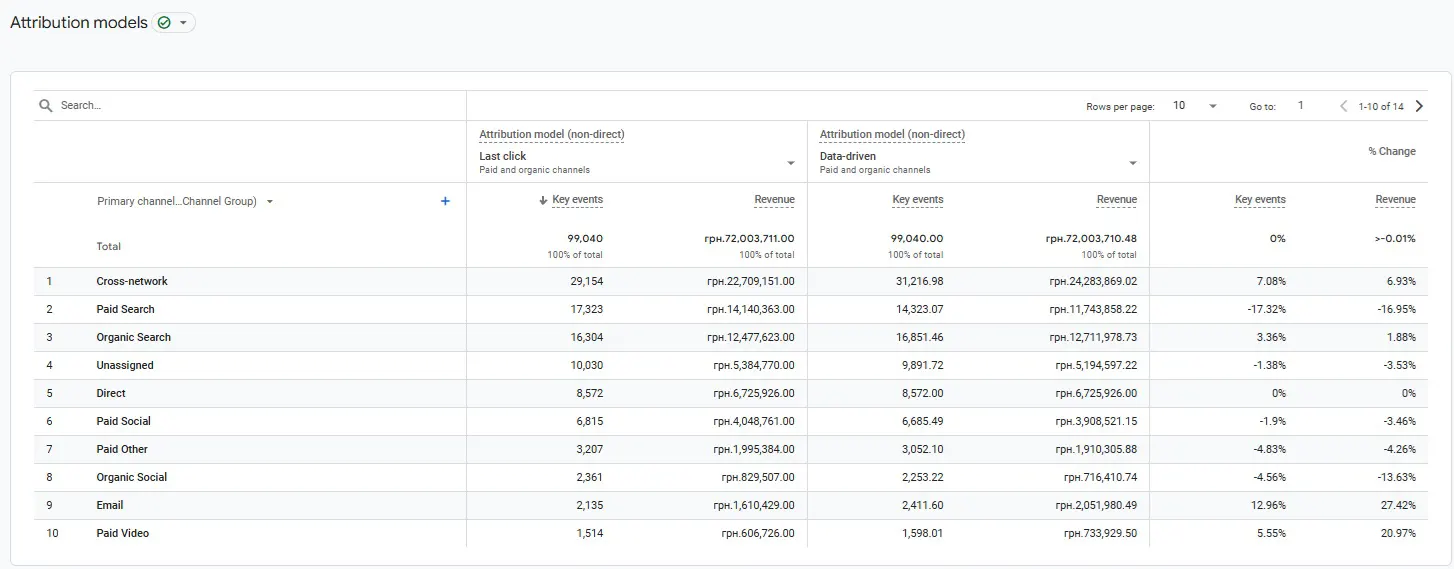
As of fall 2024, Google has reduced many attribution models in many services and left only 2, namely:
👉 last click;
👉 data-driven.
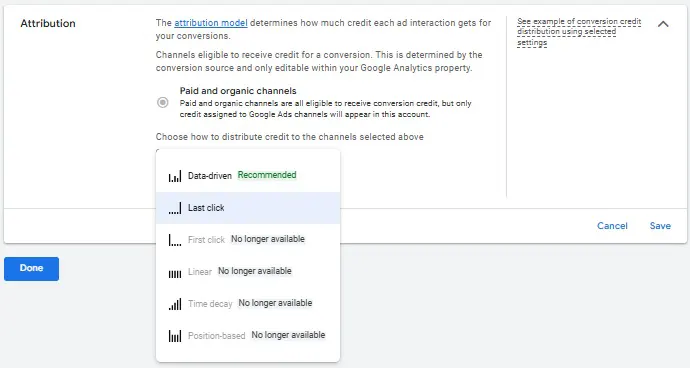
We do not delete previously published information about attribution models, as it can be used for other advertising systems.
Why were attribution models invented?
Attribution models were invented for a more comprehensive analysis of the effectiveness of advertising channels, understanding the indirect influence of channels on the implementation of certain conversions.
Yes, that's right. If there was no understanding of the effectiveness of a particular channel in the process of client maturation, many would turn off most advertising and the wheel of advertising activity would sooner or later stop.
Actually, this is why the developers provided a report on multi-channel sequences.
Multi-channel sequences are a visual report of user communication through various channels with the site from the moment of acquaintance to the conversion.
This report looks approximately like this:
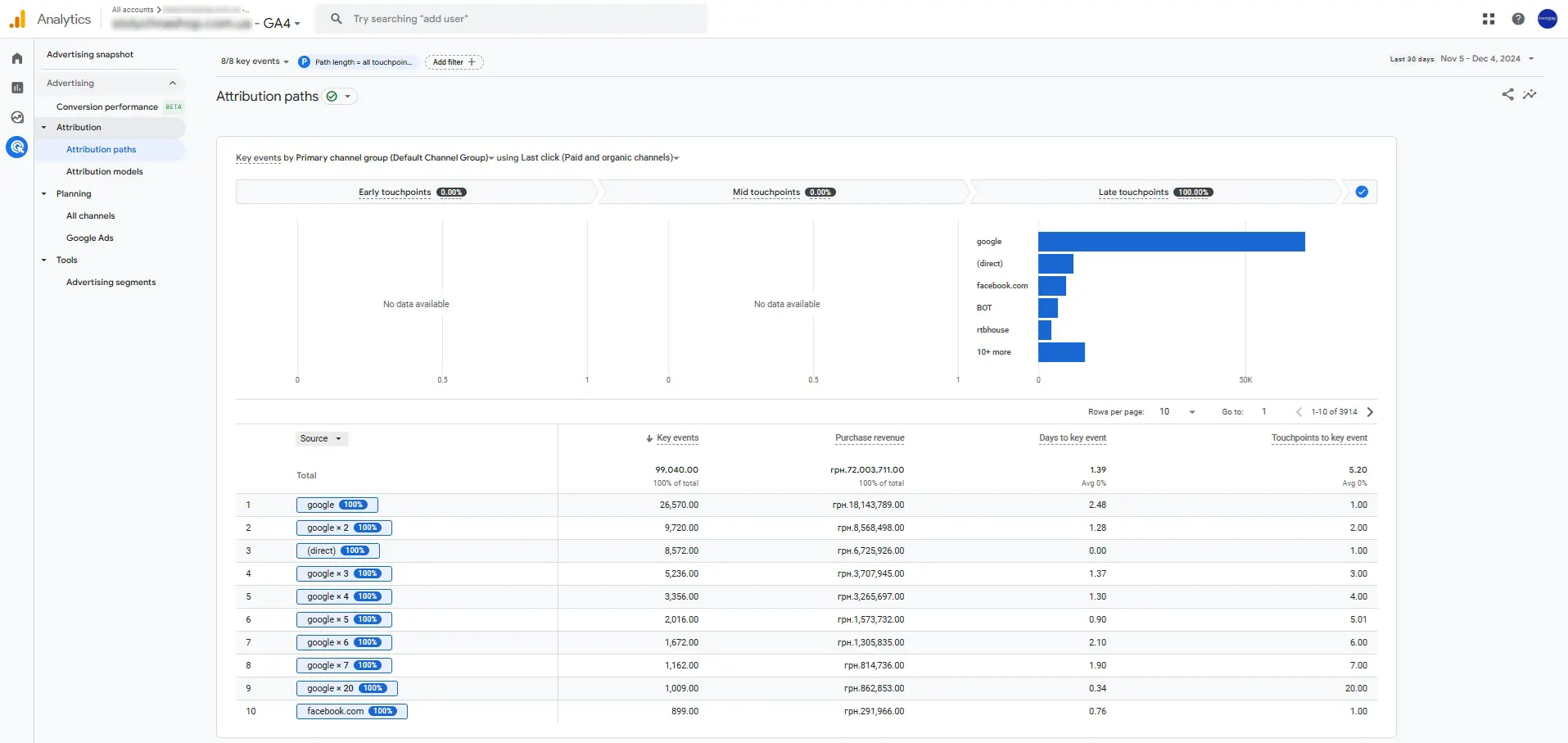
This report has several add-ons:
- selection of analyzed conversions;
- analysis time;
- selection of advertising traffic type;
- additional filtering.
By filtering specifically, you get the most accurate understanding of the channel's performance.
Unfortunately, this report in Google Analytics 4 is not very detailed, but there is some useful information, such as:
- days before the event;
- number of contacts before the event;
- number of events linked to other parameters and advertising campaign.
There was something similar in Universal Analytics before, but there is no option to filter campaigns to get summary data. At least, you can visually observe the overall picture.
We really hope that this report will be improved, since the reports were more informative before.
All Internet marketers are advised to familiarize themselves with this report in order to avoid mistakes in complex promotion and contextual advertising.
We hope this article about the dry theory of web analytics was not too boring for you, and maybe even informative. We will be glad to meet you again.
 Order a service